Key Takeaways
- Occasional forgetfulness is a normal part of aging and does not automatically signal dementia.
- Repeated memory lapses, confusion, or personality changes can be signs worth discussing with a doctor.
- Memory care communities offer structured, compassionate support for those living with dementia.
- Conversations with a loved one go more smoothly when approached with empathy and patience.
- Knowing your options early gives families more time to make thoughtful, informed decisions.
Age-Related Memory Changes Versus Dementia
You walk into a room and forget why you came in. You spend 10 minutes searching for your glasses, only to find them on your head. If any of this sounds familiar, you are not alone. Memory changes are something most people experience as they get older, and they can feel unsettling even when they are completely normal.
The difference between typical age-related forgetfulness and dementia comes down to patterns, frequency, and how much those changes affect daily life. Knowing what to look for can help you and your family make informed decisions, whether that means a conversation with a doctor or exploring The Enclave of Franklin and other memory care options down the road.
Normal Memory Changes That Come with Age
Forgetting where you put your keys or briefly drawing a blank on someone’s name does not mean something serious is wrong. These small lapses are common and tend to happen more as people age. In most cases, the memory comes back on its own or with a gentle reminder.
What makes these moments normal is that they are occasional, not constant. You still recognize familiar faces. You can follow a conversation, manage your daily routine, and recall important information when you need it. A momentary slip is very different from a pattern of memory loss that interferes with everyday life. The National Institute on Aging offers a helpful breakdown of what separates typical forgetfulness from more serious memory problems.
Signs That Go Beyond Typical Forgetfulness
Memory Changes Worth Paying Attention To
Some changes are worth a closer look. If your loved one repeatedly forgets recent conversations or events, gets confused about the date, or no longer recognizes people they have known for years, that goes beyond a typical lapse. These are patterns, not one-off moments. Reviewing the 10 early warning signs of Alzheimer’s and dementia from the Alzheimer’s Association can help you recognize what deserves closer attention.
Personality and mood shifts can also be meaningful signals. A person who has always been calm becoming unusually anxious or withdrawn, or someone who was once independent struggling to follow familiar routines, may be experiencing something beyond normal aging. When you notice these kinds of changes, it is worth paying attention.
When to Seek a Medical Evaluation
If memory changes start affecting someone’s safety or daily functioning, that is a good time to connect with a doctor. Things like getting lost in familiar places, missing medications, or leaving the stove on are signs that support may be needed.
Family members often notice changes before the person does. If multiple people in your circle are seeing consistent, worsening shifts, that is a strong reason to seek a professional evaluation sooner rather than later. Learning how to deal with dementia in a parent can also help you feel more prepared for those early conversations.
How Memory Care Supports Those with Dementia
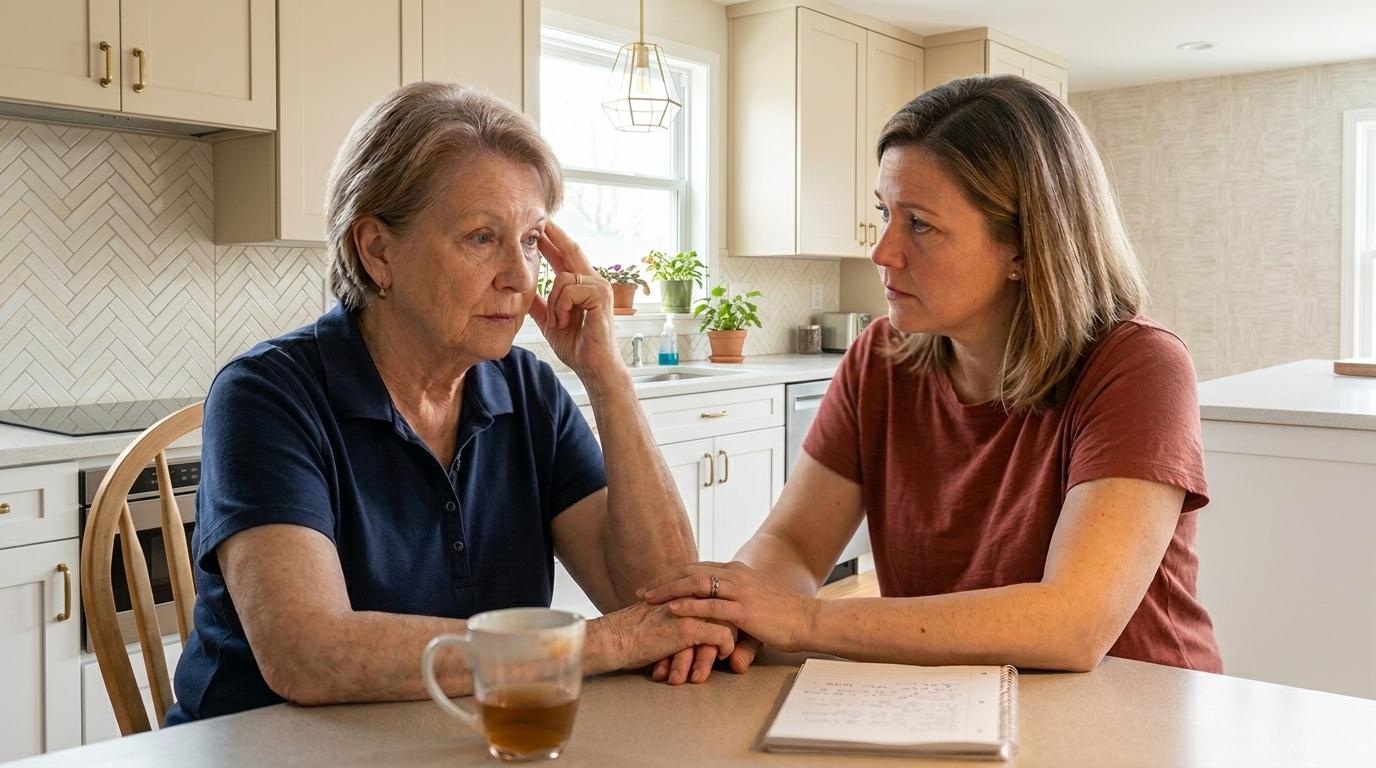
Older adult sitting with a younger person, engaged in a calm, supportive conversation about memory and aging.
Memory care is a type of senior living designed specifically for people living with Alzheimer’s disease or other forms of dementia. It provides a structured daily routine, which can bring a sense of calm and predictability for those who struggle with confusion or disorientation.
Associates in memory care communities are trained to provide consistent, compassionate care that respects each resident’s dignity. The physical environment is also designed with safety and comfort in mind, reducing stress and supporting residents in ways that a typical home setting may not be equipped to handle.
For families, memory care can bring genuine peace of mind. Knowing that a loved one is in a safe, supportive environment can ease the weight of caregiving and allow relationships to feel more like relationships again.
How Families Can Navigate This Transition
Starting the Conversation with a Loved One
Talking to a loved one about memory concerns is rarely easy. Approaching the conversation with empathy rather than urgency can make a real difference. Focus on specific observations rather than broad statements, and center the discussion around their comfort, safety, and day-to-day needs.
Give them space to share how they are feeling too. These conversations tend to go better when the person feels heard rather than pushed toward a decision. Reading about open-ended questions to ask someone with dementia can give you a helpful framework before you sit down to talk.
Explore Senior Living Options Together
Senior living communities offer a range of care options, including assisted living, memory care, and respite care.
- Assisted living can be a good fit for those who need some support with daily tasks but still have a strong degree of independence.
- Memory care provides more structured support for those with dementia.
- Respite care offers short-term stays that can give family caregivers a chance to rest and recharge.
Whenever possible, involve your loved one in the process. Touring communities together and hearing their preferences can help everyone feel more at ease with the path forward.
Moving Forward with Clarity and Care
Recognizing the difference between normal forgetfulness and something more significant is one of the most valuable things a family can do. Early awareness means more time to explore options, ask questions, and make decisions without feeling rushed.
The Enclave of Franklin offers assisted living, memory care, and respite care to support seniors and families across Franklin, Bellingham, Medway, Norfolk, and the surrounding communities. Reaching out early, even just to ask questions, can make the road ahead feel a little clearer.